Over the past few years, I’ve helped hundreds of early-stage founders raise hundreds of millions of dollars.
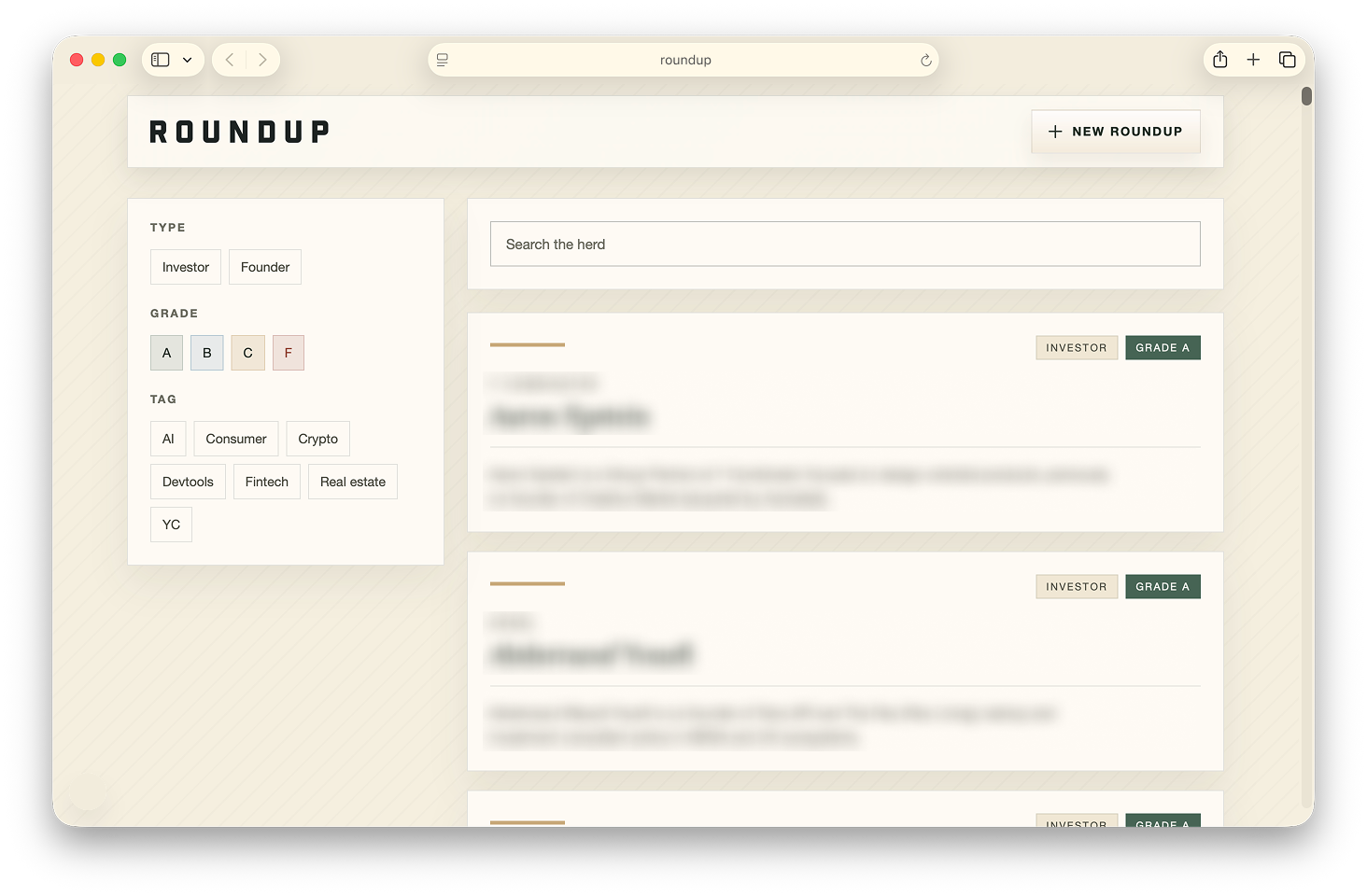
To make this easier, I used AI to consolidate and enrich my 1,000-person investor network and automate the dozens of matches and intros I make each week. I call it Roundup 🤠🐄
While it’s top of mind, I wanted to share the advice I always give founders about fundraising. This advice is primarily for founders who are raising early-stage rounds, including angel, pre-seed, seed, and Series A.
1. Make fundraising friends.
This is the number one advice I give founders. Fill your pipeline with founders not investors. Every founder you get feedback from on fundraising will typically yield 3–10 investor intros. If you do this enough times, your pitch will be perfected, your pipeline will be full, and your round will essentially be done.
2. Create a market for the equity in your company.
This is more of a mindset. Fundraising is ultimately about selling equity in your company for capital. Your objective is to raise the most capital for the least equity from the best partners as quickly as possible. You want to create a market for the equity in your company. If you treat fundraising like a marketplace, it feels less personal and more like a supply-and-demand problem.
3. Run a process.
If you are fundraising, run a process. Spend at least 1–2 weeks preparing and getting feedback from fundraising friends and then stack your investor meetings into a 1–4 week window. Andrew Farah, founder and CEO of Density, gives a great talk on how to run fundraising process.
4. Don’t fundraise if you’re not fundraising.
If you are not running a fundraising process, do not spend your time meeting with investors. It's their job to meet with founders every day. It's your job to find PMF and make something people want, not meet with investors every day. When you meet with investors outside of a process, you are unprepared and you haven't created a market for the equity in your company. So, they often have the leverage. If a lot of investors are reaching out to you, that might be a good signal to run a process.
5. Have an ABC plan.
You don't know what the demand for the equity in your company is. The amount you're raising and at what valuation is not a fixed number. It's flexible. The best way to prepare for this is to have an ABC plan. Your plan A is your cockroach plan. Your plan B is your ideal plan. Your plan C is for when the stars align and everybody wants in your round. Here’s an example ABC plan for an AI seed round from ChatGPT:
| Plan | Positioning | Raise | Post-Money Valuation | Dilution |
|---|---|---|---|---|
| Plan A | Cockroach plan | $2–3M | $10–15M | ~15–25% |
| Plan B | Target plan | $4–6M | $25–45M | ~10–15% |
| Plan C | Hot / competitive plan | $8–12M | $40–70M+ | ~8–12% |
6. Nail your blurb.
At this stage your blurb is more important than your deck. It's the thing that opens the door. Investors see dozens to hundreds of emails every day, and if the blurb doesn’t land, you won’t get an intro and your pitch won’t be heard. Your blurb should include three to five sentences or bullets that highlight your startup, including a 1–2 sentence description of what you do, your traction, and why your team is perfect for this opportunity. It should be concise and easy to read. Get feedback on your blurb before sending it out.
7. Make it easy to make intros.
Make it easy for founders and investors to intro you to other investors by sending them an email blurb for each investor you're requesting an intro to. Include the investor’s name and fund in the subject line, and put your blurb in the body. When they offer to make an intro for you, take it seriously by immediately sending an intro request email they can easily forward.
8. Don’t send your deck.
This is a touchy subject, and it depends on your stage, but I typically recommend not including the deck in your initial outreach. Get investors on a call first. At early stages, especially angel, pre-seed, and seed, investors are betting on you, not the deck. If you send the deck in advance, you might miss the chance to show what makes you special.
9. Frame your round correctly.
The names of rounds, how much founders raise, and the expected progress are constantly changing. For example, in the world of AI an angel round feels more like a pre-seed, a seed, and a seed, an A. This will change. Make sure you frame your round in the terms the market uses. If you don't, you will get rejected unnecessarily.
10. Lean into objections.
Do not try to hide from the things that make your startup look bad. Good investors will see these things from a mile away. Instead, try to identify these objections before you start fundraising and come up with a narrative for how you’ll address each one. This will make investors trust you more and will ultimately make you smarter about your business. Vinod Khosla gives a great talk on this in Pitch the Way VCs Think.
11. Close investors as they come in.
Most founders think you need a lead to close investors. It often works the other way around. Closing investors as they commit to your round builds momentum and momentum attracts additional investors. If an investor says, "Come back to us when you have a lead," that is effectively a no. They don’t have conviction. If you do find a lead investor, you probably don’t want to go back to the low-conviction investor because you want high-conviction investors in your earliest rounds.
12. No check is too small.
Some of the best and most helpful investors in your round might only be able to invest $1–5K. Be open to taking small checks from good founders and operators. These investors are often the most helpful during and after fundraising. They’ll make intros and support you when things go wrong.
13. Listen to the no, not the why.
I picked this up from Michael Seibel at Y Combinator, and I share it with every founder friend who is fundraising. When an investor gives you a no and tells you why, believe the no not the why. The reason they say no (e.g., not a fit, too early) is often not the real reason. Don’t try to rationalize it. Listen to the no, thank them politely for their time, and move on.